


WELCOME TO THE SOUTH YORKSHIRE DIGITAL INFRASTRUCTURE TEAM
The South Yorkshire Digital Infrastructure Team is a dedicated team committed to supporting the development of the infrastructure needed to bring high-quality connectivity across the region.
Anchored in the principles of our comprehensive South Yorkshire Digital Infrastructure Strategy, our mission is to ensure the best possible digital connectivity across South Yorkshire and empower all members of South Yorkshire society to benefit from developments in connectivity technology.
Our aims
Our primary aim is for all residents and businesses in South Yorkshire to have access to broadband and mobile services through our work to ensure the region has resilient and future-proof digital infrastructure. We are focused on maximising access to fast, reliable broadband and increasing mobile coverage across urban and rural areas alike.
This level of access to digital connectivity is essential to support the economic growth, social wellbeing, and technological advancement of South Yorkshire residents and businesses.
Our goals
- Ensure the success of South Yorkshire's Superfast broadband and 4G rollout is carried forward to the rollout of gigabit broadband and 5G.
- Support the social and economic priorities set out in the Strategic Economic Plan ( PDF 5MB).
- Create an inclusive platform that helps improve outcomes for everyone in society.
- Use effective governance and data-driven methods to fully unlock South Yorkshire's digital potential.
- Position South Yorkshire as a leading centre of applied digital innovation and adoption.
Delivery plan
The South Yorkshire Digital Infrastructure Strategy Delivery Plan (PDF 825 KB) outlines our roadmap for achieving these goals. Through strategic partnerships, robust investments, and community engagement, we are driving projects that enhance digital infrastructure and services.
Join us as we transform South Yorkshire into a leading digital hub, where innovation thrives and communities flourish. Learn more about our initiatives and how you can be a part of this exciting journey towards a digitally empowered South Yorkshire.
Broadband
What is Gigabit-Capable Broadband?
Gigabit-capable broadband is an internet connection capable of delivering download speeds of up to 1 gigabit per second (1Gbps), or 1,000 megabits per second (Mbps). While not everyone needs a full gigabit-speed package, gigabit-capable networks use modern infrastructure designed to support today's digital lifestyles and the technology of the future.
Across South Yorkshire, gigabit-capable broadband is available to more than 96% of premises, meaning most households and businesses can now choose to connect to this newer generation of broadband technology.
Understanding Different Types of Broadband
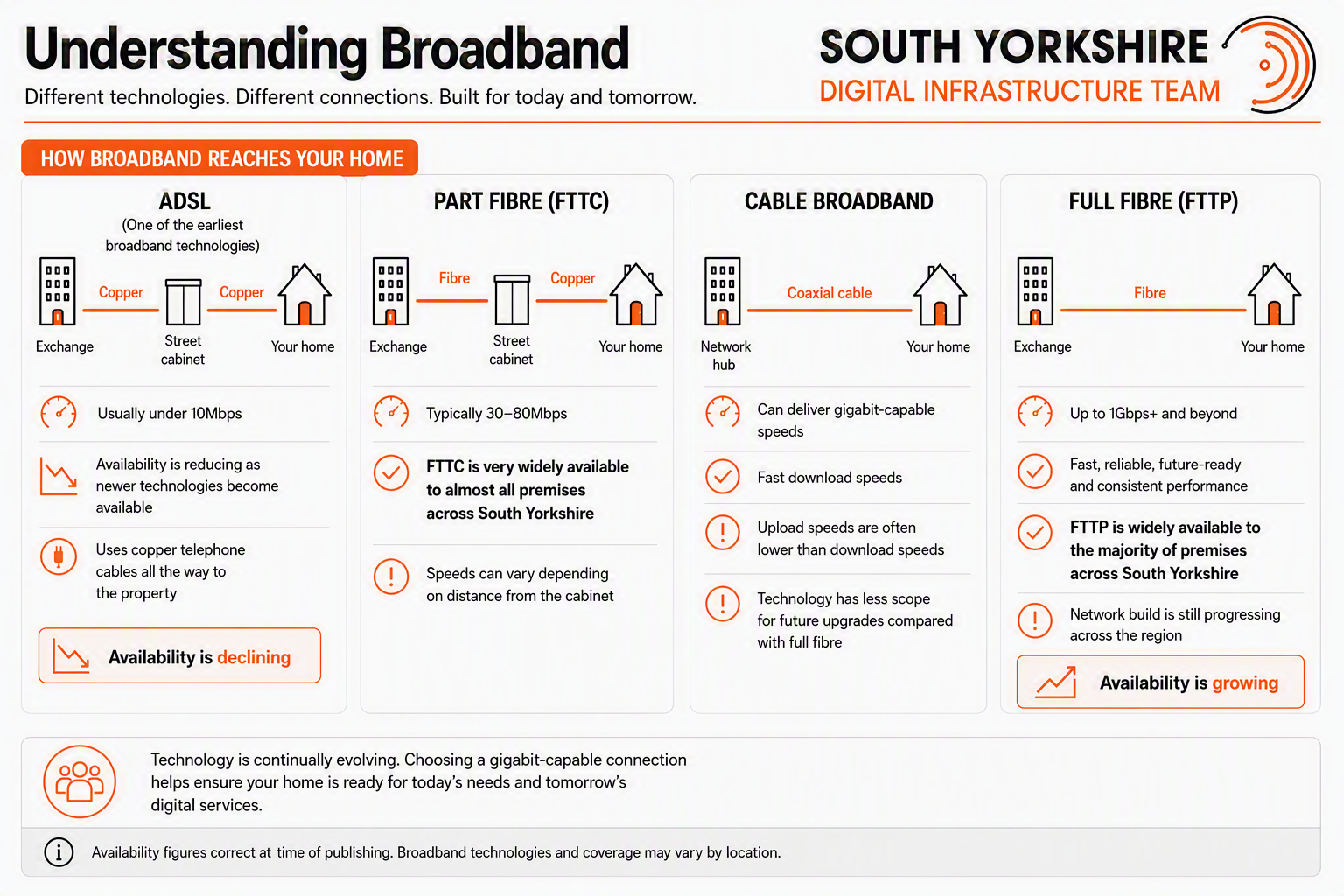
Not all broadband connections work in the same way. The main difference is how data travels between the exchange and your property.
The graphic shows a breakdown of the four means of a broadband connection reaching a consumer home:
- ADSL is the oldest broadband technology, with a copper wire connection from exchange to street cabinet and from street cabinet to property; this can achieve speeds of up to 10mbps, and availability of this technology is now in decline.
- Fibre to the cabinet (shortened to FTTC,) is a part-fibre connection, with a fibre-optic cable running from exchange to street cabinet and a copper wire connection from street cabinet to property; this can achieve speeds of 30-80mbps, but speeds can vary subject to distance between the street cabinet and the property. This technology is widely available to the majority of properties across South Yorkshire.
- Cable broadband is delivered via coaxial cable from a network hub direct to the home; it can deliver gigabit-capable download speeds (1000mbps,) but often upload speeds are slower than download speeds, and there are limitations to the scope for this technology to be updated for future technological developments.
- Fibre to the property (shortened to FTTP, also known as full-fibre,) is a full-fibre connection, with a fibre-optic cable running from exchange to property; this can achieve gigabit-capable speeds (1000mbps) for download and upload, and is very future-proof as the technology can be updated remotely. This technology is available to most properties across South Yorkshire, and network build is still underway.
Why Does Broadband Technology Matter?
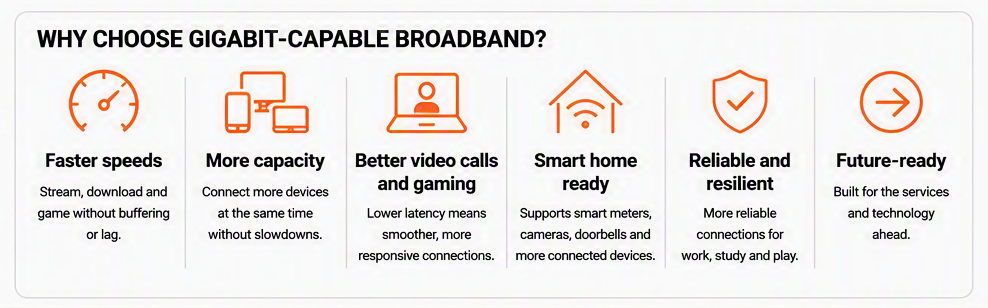
Most households now rely on broadband for much more than browsing the internet. Remote working, online learning, video streaming, gaming, online banking, healthcare appointments and accessing public services all depend on a stable internet connection.
In addition, many homes are becoming increasingly connected. Smart TVs, video doorbells, security cameras, smart meters, smart thermostats and other connected devices all use your broadband connection. As the number of connected devices grows, so too does demand on your home network.
More Choice Than Ever Before
While many people are familiar with the UK's largest broadband network providers, a growing number of alternative networks now operate across South Yorkshire. These independent network operators provide additional choice in many areas and may offer different service packages, pricing models and customer support options. Availability varies by location, so it is worth checking what networks serve your property.
Does Gigabit-Capable Broadband Cost More?
Not necessarily. While newer broadband technology was once associated with higher prices, the gap between traditional services and gigabit-capable services has narrowed significantly. In some cases, older copper-based services can now cost as much as, or more than, modern alternatives.
It's also important to remember that choosing a gigabit-capable network does not mean you have to purchase a 1Gbps package. Many providers offer a range of packages using the same modern infrastructure, allowing households to choose a service that reflects their needs and budget.
For households receiving certain benefits, discounted social tariff broadband packages may also be available.
Find Out More
Ofcom offers a broadband service checker that can help you see what service is available at your address.
There are several Ofcom-accredited comparison sites that they recommend to help you find a deal that works for your household.
There are some great tools online that can help you understand what size package would suit your household; a web search for a phrase like “what broadband speed does my household need” will help you to find them.
Can’t get a gigabit-capable connection?
If you can't get a gigabit-capable connection yet, it could be coming soon. The commercial sector is building fast in South Yorkshire, both the big, national companies like Openreach and Virgin Media O2 and smaller, more local companies known as "Alt Nets" (alternative networks.) If your area isn't being served by gigabit-capable infrastructure yet, some infrastructure providers allow you to register your interest in getting a faster connection so they can see where there is demand and notify you when they start building in your area.
This is not an exhaustive list, but this is a brief overview of some suppliers you can register an interest with:
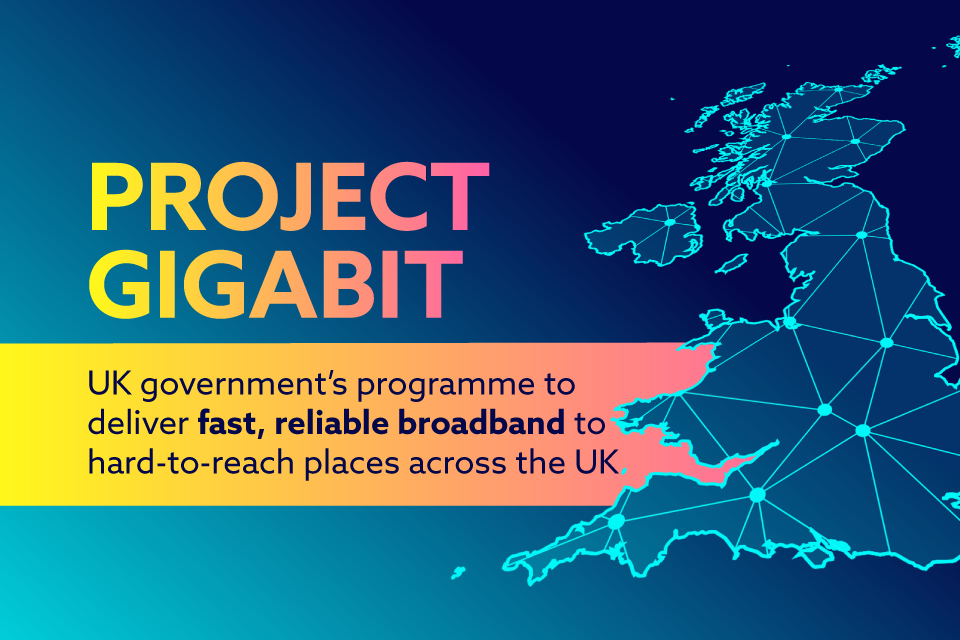
If there are no imminent plans for commercial rollout in your area, it is possible that government-sponsored rollout is coming - check out our section on Project Gigabit.
Project Gigabit
Mobile coverage map
South Yorkshire Mayoral Combined Authority (SYMCA) has introduced a new online tool that lets residents check the quality of their mobile signal using information gathered from bin lorries in the region. Earlier this year, SYMCA’s Digital Infrastructure Team (SYDIT) partnered with mobile analysis company Streetwave to install monitoring equipment on waste collection vehicles throughout South Yorkshire. These devices evaluate signal strength, download and upload speeds to provide comprehensive data about local mobile networks.
You can check mobile coverage in your area by entering your postcode and selecting your preferred network using the postcode checker or by viewing the coverage map.
Open Coverage Checker in a new window
The data includes all four major UK Mobile Network Operators (MNOs): EE, O2, Three, and Vodafone, who own and maintain the network infrastructure for mobile services, for example mobile masts and signal boosting cell sites. Other providers, such as giffgaff and iD Mobile are what is known as Virtual Mobile Network Operators, which operate utilising the infrastructure from one of the MNO networks —for example, giffgaff uses O2, while iD Mobile relies on Three. Check which network your provider uses.
Survey devices focus on outdoor coverage by gathering data from vehicles and backpack-based surveys. Results come from mobile handsets performing live speed and signal strength checks.
WHAT ELSE IS IN THIS SECTION?
LOOKING FOR SOMETHING ELSE?SHARE
Resource Library
- Check your broadband coverage options
- Check your mobile signal coverage
- SY Digital Infrastructure Strategy
- 5G: check the facts
- SYDIT – gigabit infrastructure guidance for new developments (PDF 188KB)
- Guide for developers (PDF 265KB)
- Broadband speeds explained
- Social Tariffs: help with the cost of broadband
Gigabit Capable Full Fibre Network Operators(opens in a new window)
This list is not exhaustive, and other providers are available.